Pinning a Cloud

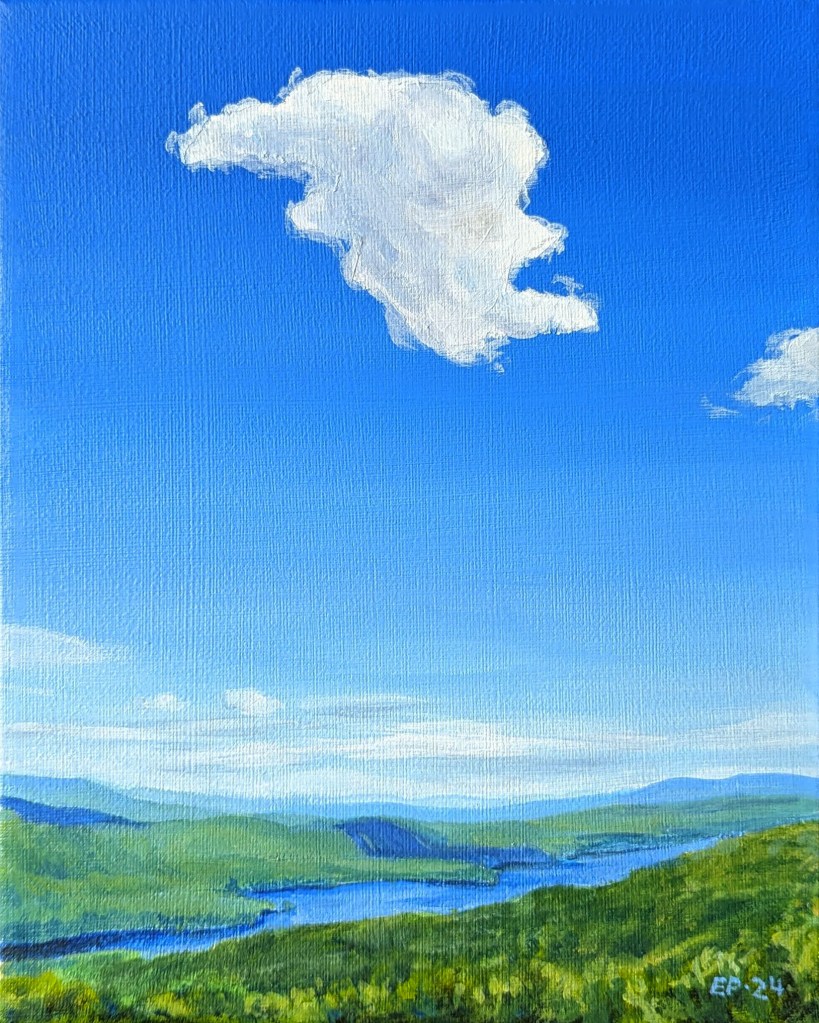
©2024, Emma Pittson, “Lone Cloud”. Acrylic on canvas, 10″ x 8″ x 0.5″.

Another day, another landscape painting!

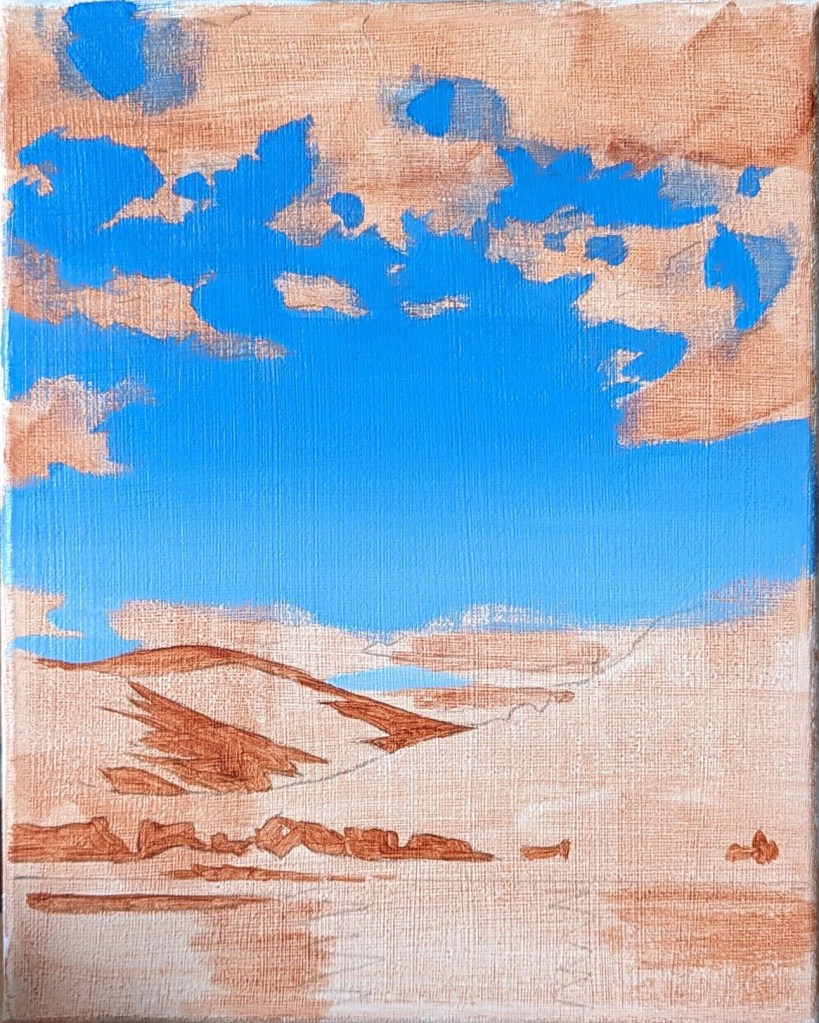
For this one, I decided to tape out the area in the sky where the big cloud was going to be because I knew that it would probably take me a few tries and several layers of paint (spoiler alert: it did!) to get the sky the right colour with the correct amount of fade. The goal wasn’t so much to have the painted cloud match the reference perfectly, but to give the white of the paint the best chance of looking bright and vivid – something that would be much easier to do over blank canvas rather than a saturated blue sky.

The layers of blue paint turned out to be thicker than I had anticipated, so when I peeled off the tape, a sharp edge was left behind in the sky. If you turn the painting to the side, or if the light catches it a certain way, there is obvious “shelf” on the surface of the painting. Woops!

Speaking of colours and fades, I keep coming across artists who work with acrylics and who also manage to make incredibly smooth gradients and shading – and all without airbrushing! I asked a few on Instagram: “WHAT is your secret??” and they always answer the same: “Layers, layers, and more layers!” I must be missing something because whenever I use Glazing medium to create layers, my paint quickly turns into a gunky, sticky mess. But if by “layers”, they mean “Keep painting the same area over and over again so that it’s so opaque that it can block an x-ray”, then I’m happy to say that that is one technique that I’ve definitely mastered!

Over The Hills and Far Away

©2024, Emma Pittson, “The Valley”. Acrylic on canvas, 10″ x 8″ x 0.5″.

I’m still deep in my “mental vacation” and enjoying painting these summer landscapes!

I’m endlessly fascinated by sunlight and shadows on hillsides. Not only do I love it when the skies are partially cloudy, thus creating clear and obvious areas of light and shadow on the ground, but I love it even more when the terrain is hilly and you get to imagine what is just beyond those hills. Makes me want to throw on a backpack and start trekking!

Original reference photo

Unlike the previous landscape paintings, I did not opt for a brightly coloured ground this time around. My intention was for the acrylics to be their best acrylic selves and show off some bold colour, and I felt that fighting against a vivid ground would be overkill. Instead, I started with a light wash of Raw Sienna, and blocked in a few of the darkest areas of the painting.

The next step was painting in the blue of the sky all in one go. With any luck, I wouldn’t have to try to spot-paint any missing or botched areas along the way (because you can NEVER match the colour in a fade perfectly, no matter how hard you try). The clouds and water were then quickly blocked in.

As usual, beyond that, I got lost in endless noodling of the hillsides. I had hoped to keep the trees of the foreground hill fairly loose and undefined, but compared to the finesse of the farthest hill, the foreground hill looked out of place. In the end, I realized that it was best to paint in some individual trees (more or less), and I’m glad I did because that’s what really made that hill jump forward!

Other sneaky Photoshop trick: I was debating for a while if I should make the farthest hill paler. To find out, I uploaded an in-progress image of the painting into Photoshop and used the Magnetic Lasso tool to select only the farthest hill, and then adjusted the Brightness on it. As you can see, that little preview convinced me that paler was better!

Undervaluing My Values

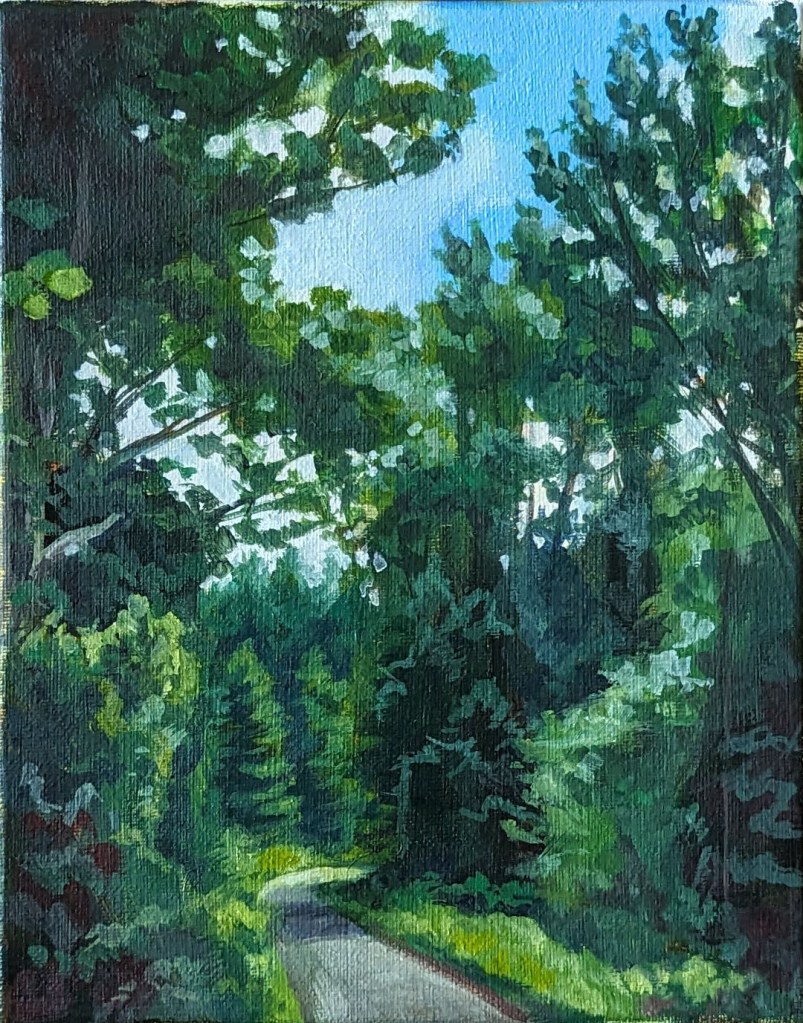
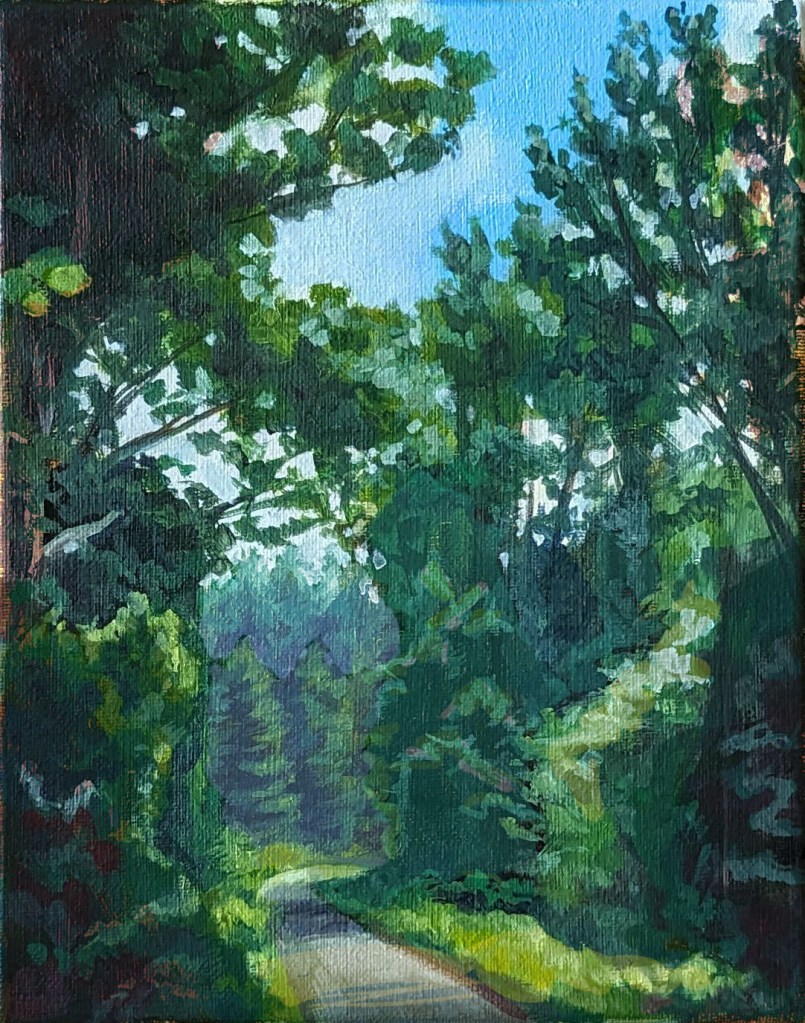
©2024, Emma Pittson, “Forest Path”. Oil on canvas, 10″ x 8″ x 0.5″.

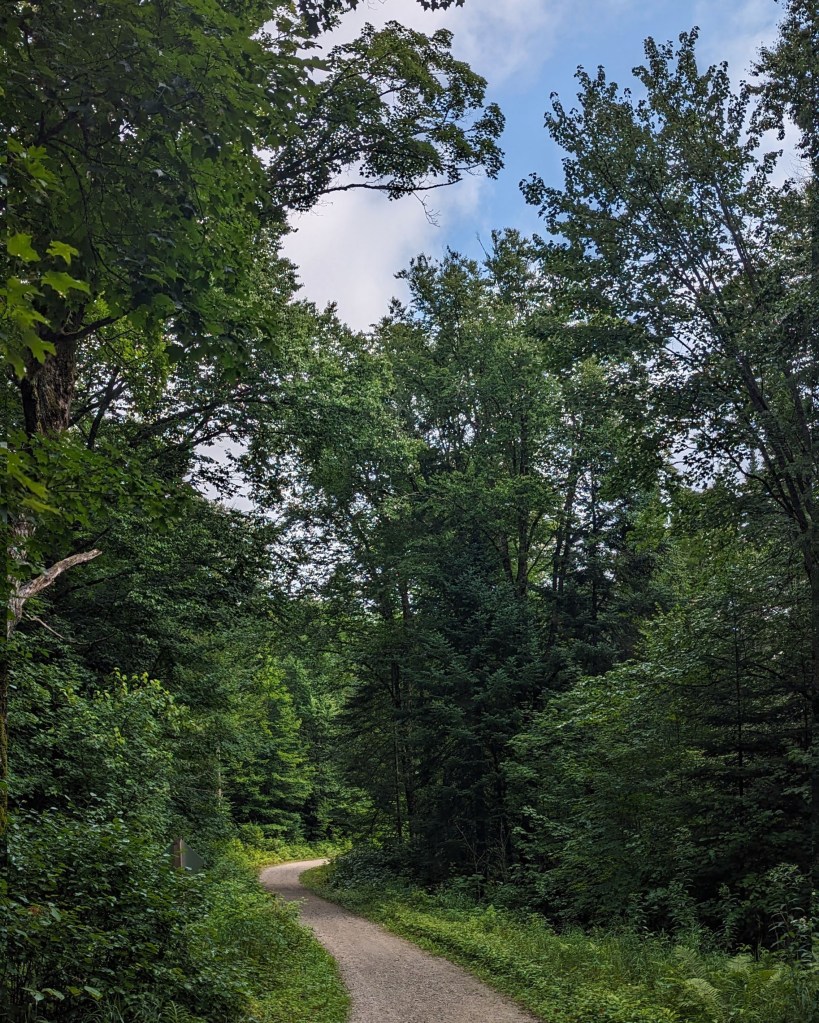
With all my paintings of lakes in recent days, I’m feeling a little waterlogged, so I thought I’d expand my painting horizons and try to paint a forest scene (“branching out” as it were). As a reference, I used one of my photos of the path that links Lac Monroe to the Chutes du Diable up at Mont Tremblant National Park

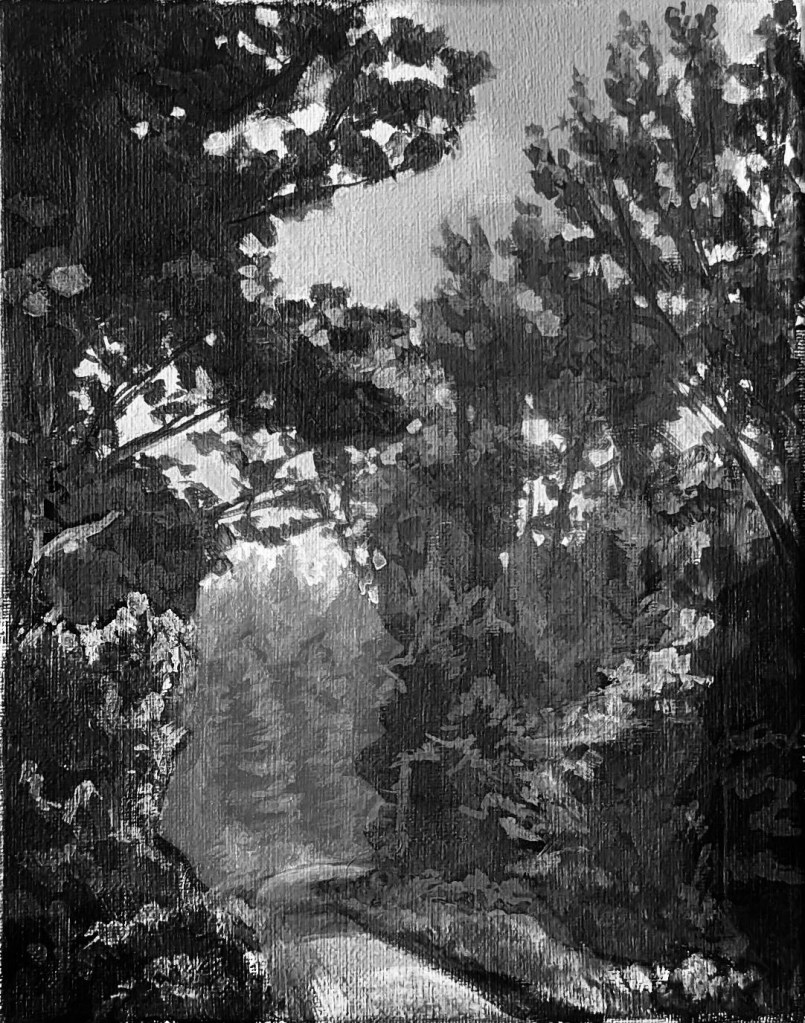
Far from being a “walk in the park” (sorry – had to!), this painting went through a LOT of reconstructive surgery. Stepping back to take in my finished piece, it became obvious to me that I had hewn too closely to my photo reference. The end result was a painting with values that worked against me, making the trees off in the distance appear to be on the same level as the trees that were in the foreground.

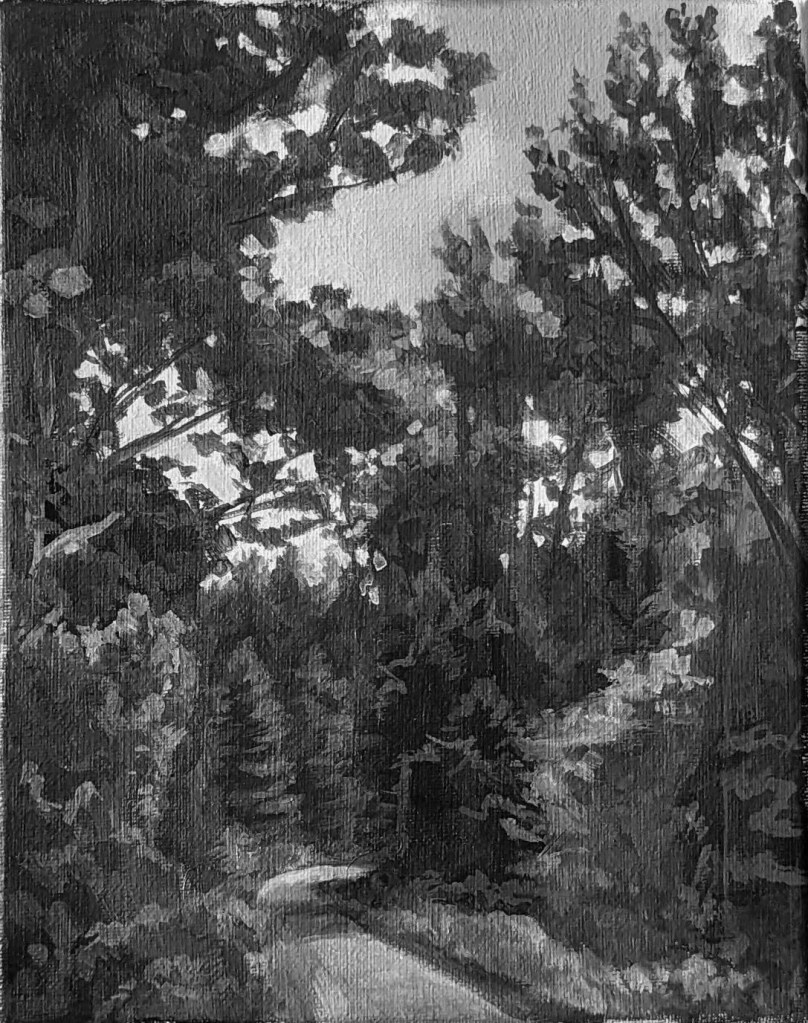
To test this theory, I brought my painting into Photoshop and used Image > Adjustments to switch it to Black & White. The results are below:

Notice how the space feels very shallow, with an awkward push and pull between the foreground and background elements? Clearly, this needed a serious overhaul!

The first thing I did was tinker with the black and white version of my painting until the values held together in a way that made sense and created a feelinge of depth.

The next step was to adjust the coloured version of the painting in Photoshop so that when converted to black and white, the colours translated to the new values (or at least, resembled them as close as possible).

Once I know what I was aiming for, I repainted the areas that needed repainting. Sometimes, I could get away with a light glaze, but other times, a complete repainting of certain areas was required.

Not gonna lie – this exercise in tinkering with values took much longer and was far more difficult than I had imagined it would be. I took countless progress photos and brought them into Photoshop so that I could compare the values, and not matter what, I always seemed to be slightly off the mark. Worse yet, the original brush marks in the first version of the painting disappeared the more adjustments I made, and I found myself missing that original, imperfect painting.

In fact, I’m not completed convinced that this painting is well and truly done as I’m sure that certain areas could use some improvement (in other words, I’m not “out of the woods yet!” – okay, that’s the last pun, I promise!!). But for now, I’m happy to move on to other things!

Lac des Sables – Take 2

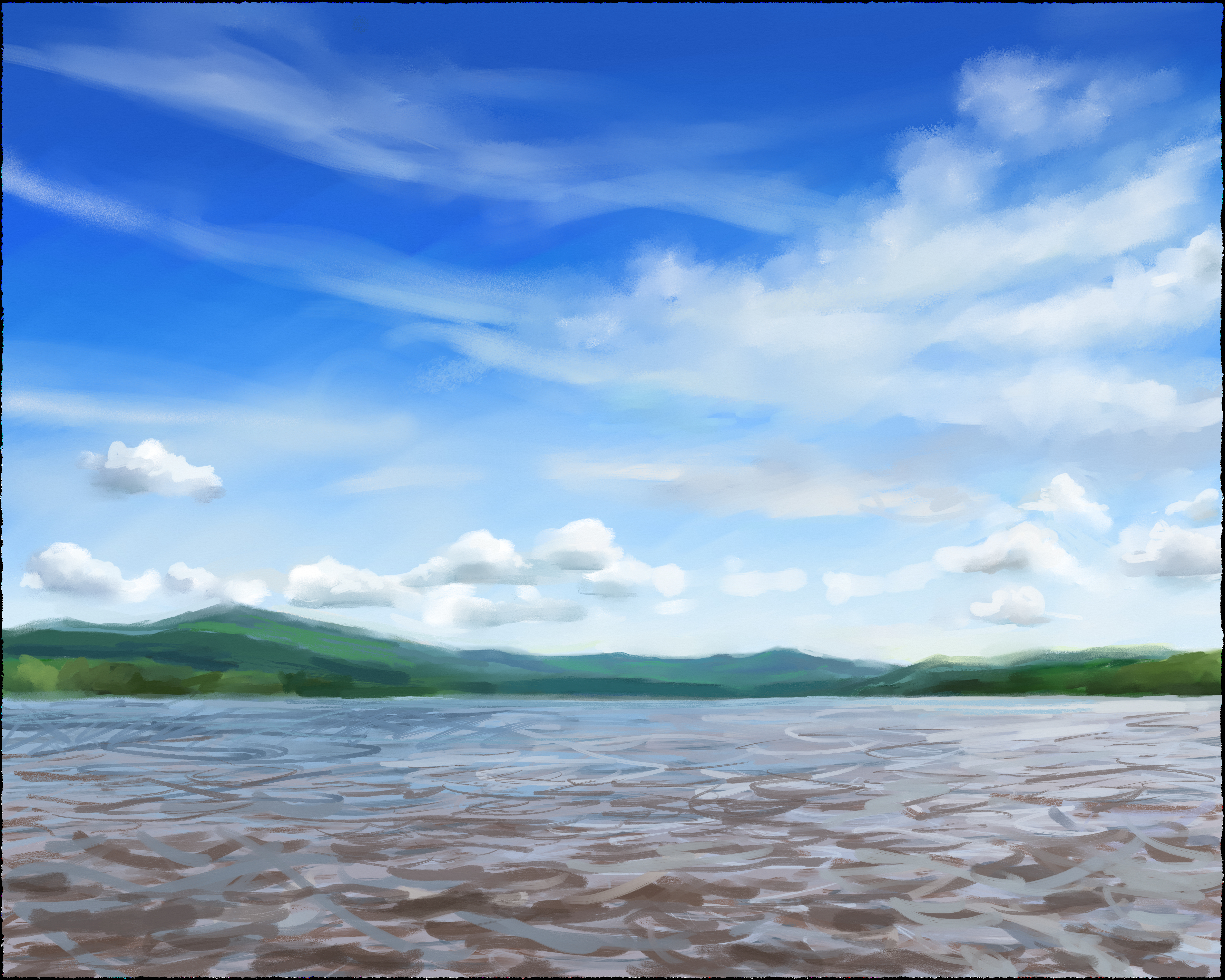
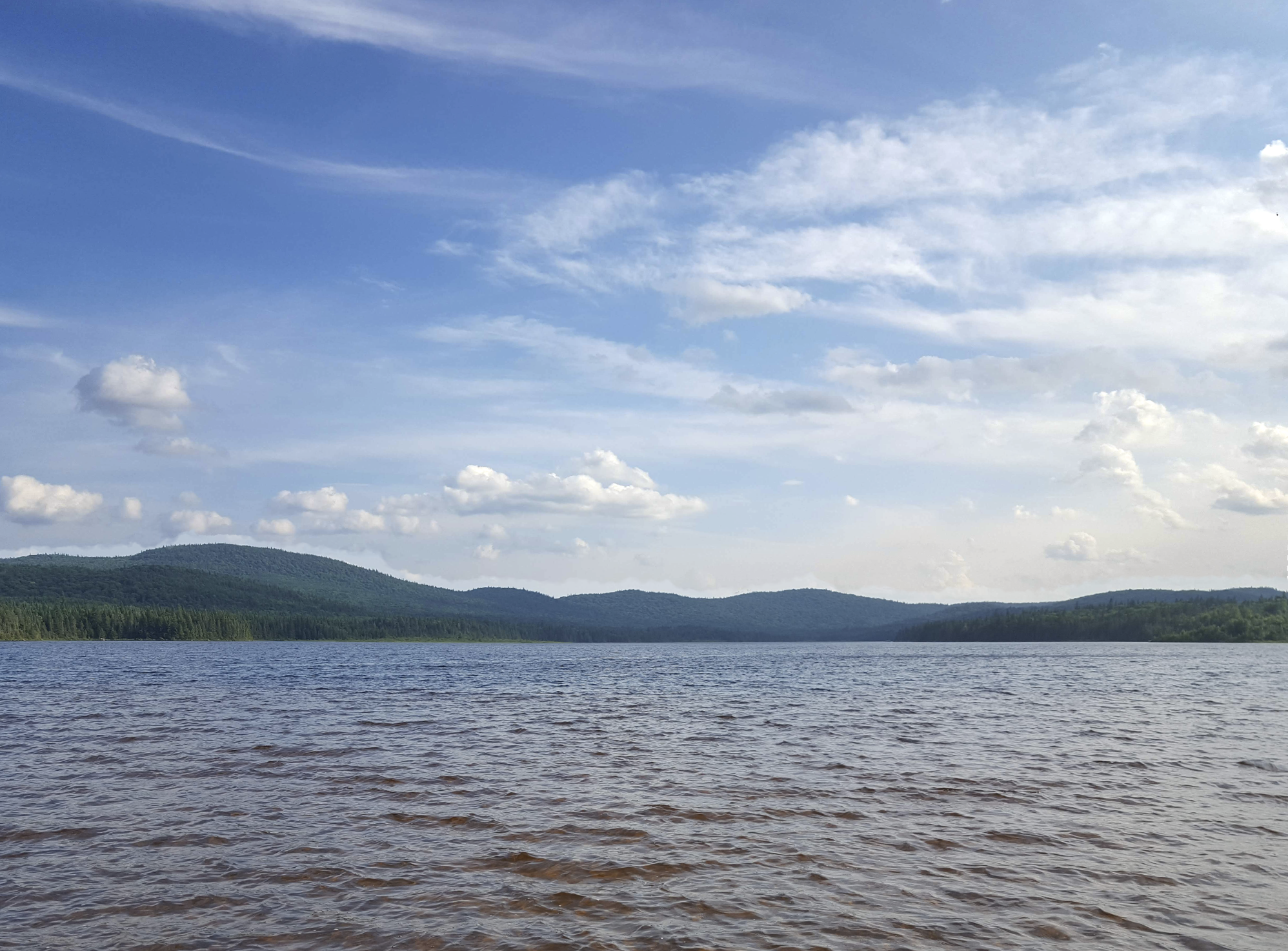
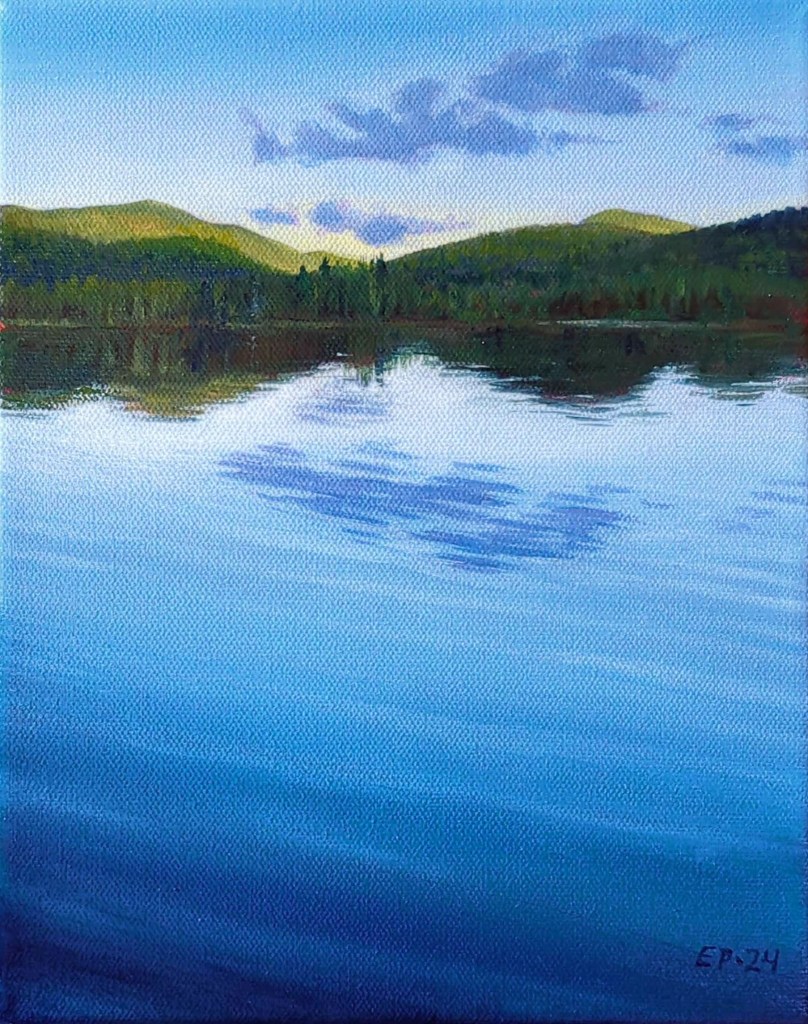
©2024, Emma Pittson, “Lac des Sables”. Oil on canvas, 8″ x 10″ x 0.5″

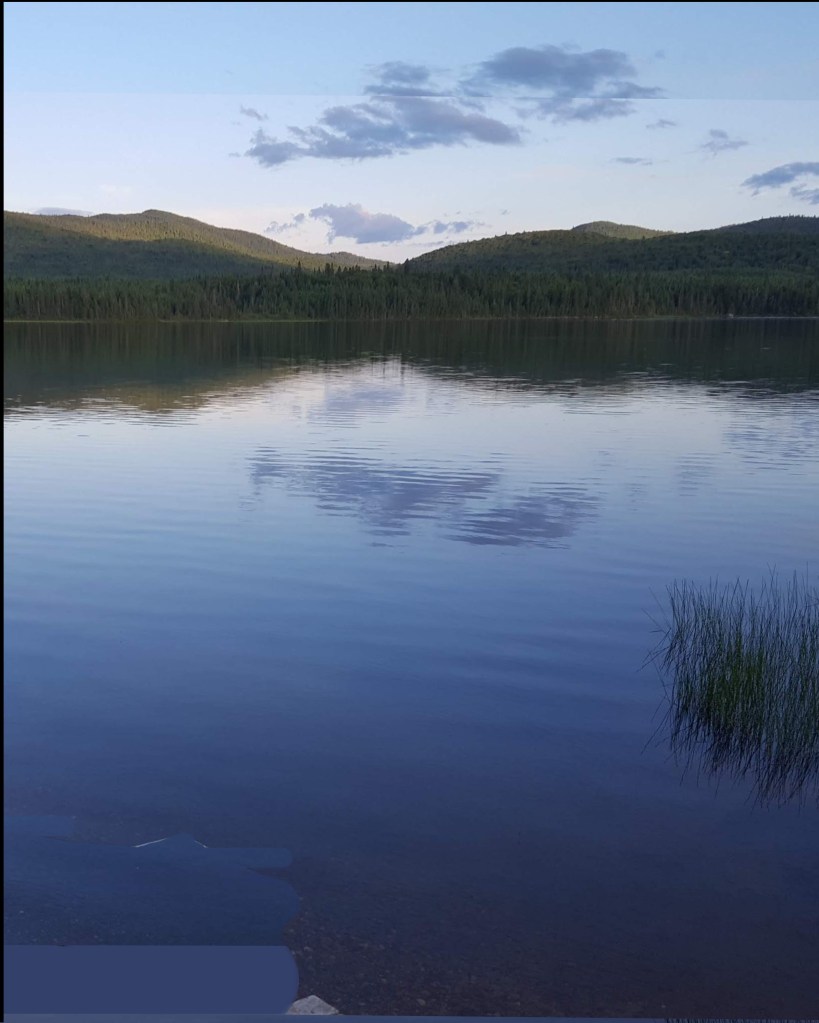
This is actually the first landscape painting that I started a few weeks ago, but I panicked at the idea of painting all those ripples in the water, so I ended up finishing the Sunset painting earlier.

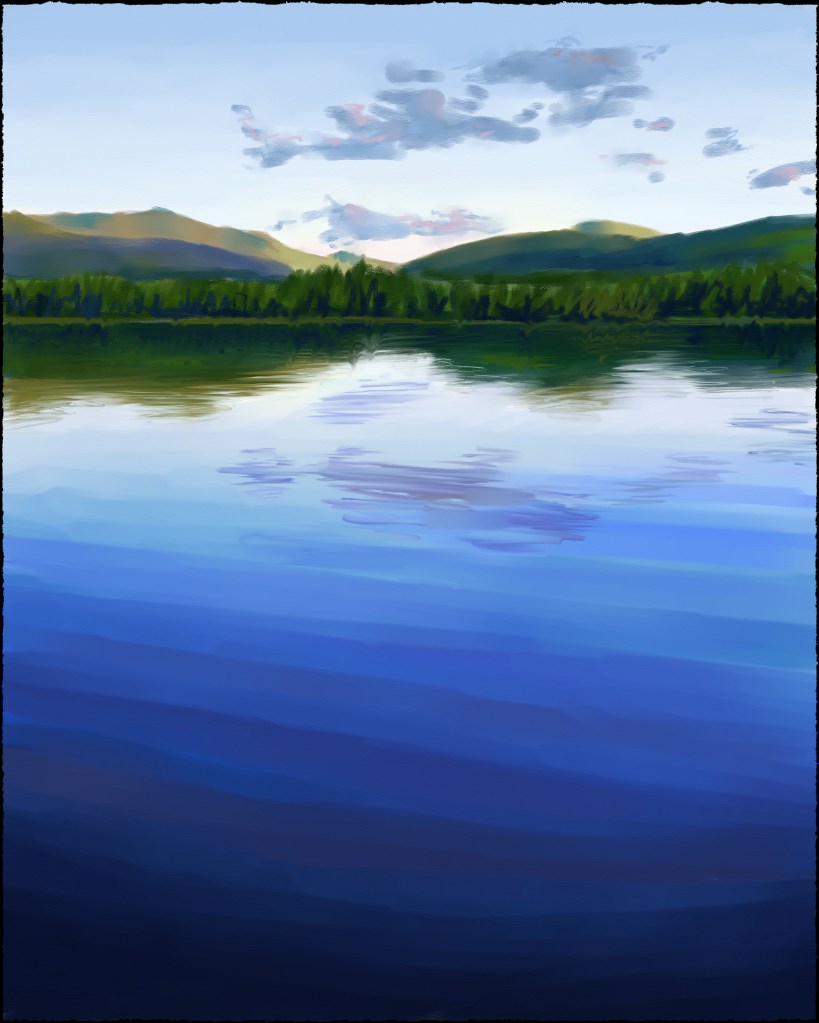
I have no clear motivation behind these landscape paintings other than treating them as opportunities to get back into painting again. I’ve spent far too long “cheating” with digital painting, and it’s a bit of a shock to realize that perceiving and mixing the correct colour is much harder than I remember.

On to the next!

Lac des Sables at sunset

©2024, Emma Pittson, “Lac des Sables at Sunset”. Oil on canvas, 10″ x 8″ x 0.5″.

I’ll say one good thing about being unemployed: plenty of time for painting!

And because I’d love nothing better than to ignore my current woes and dream of happier days to come, I’m manifesting my future summer vacation by painting where exactly I’d like to be right about now (okay, well, maybe not right NOW now, because it is February, after all).

I can also assure you from personal experience that Holbein’s Duo Aqua oil paint (in Ultramarine Blue, no less!) CAN clean up, fully and completely, from your carpet.