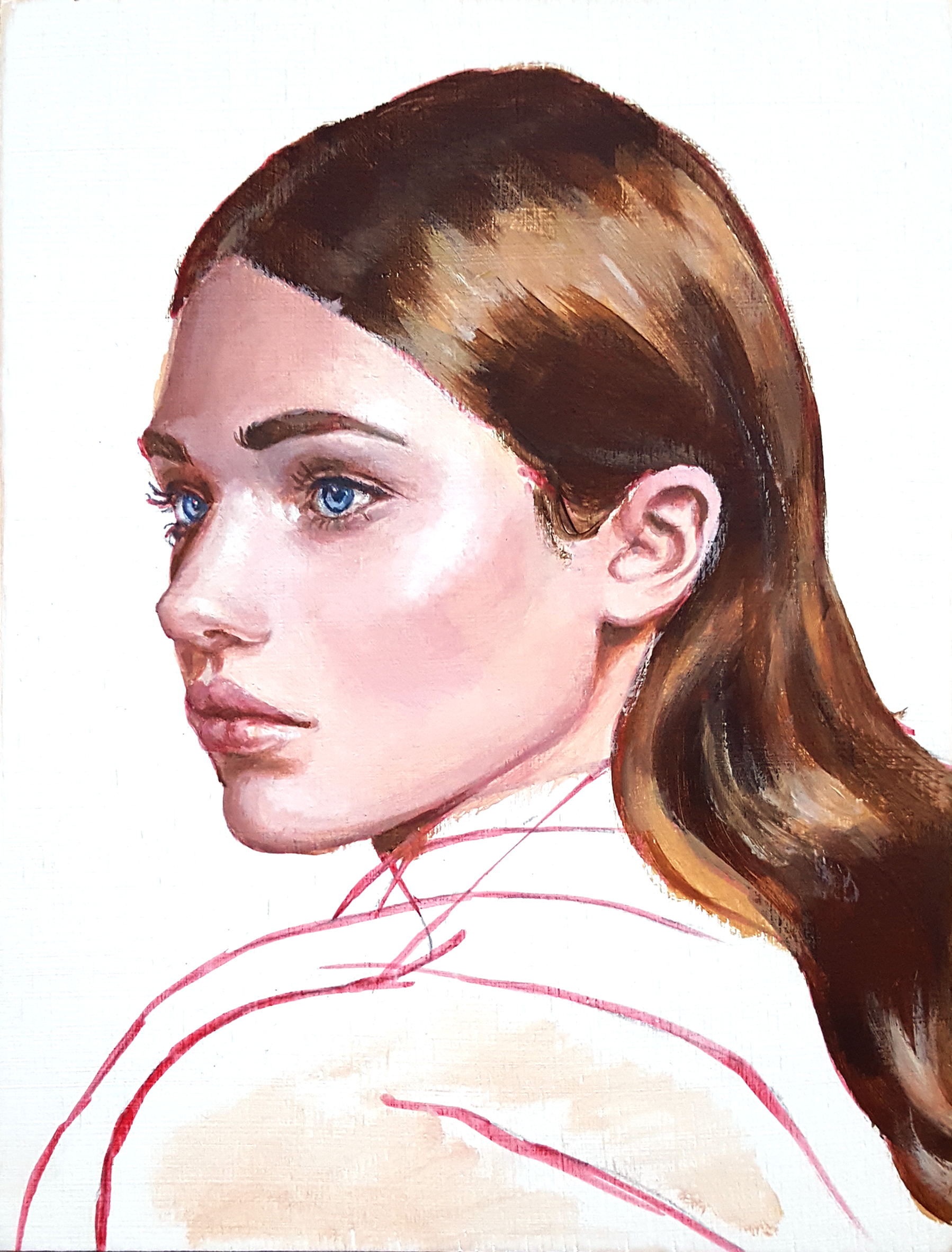
Well, it had to happen eventually: I finally conducted an experiment that ended up being a near-total failure. This one definitely put the PAIN in painting.
We have two bottles of oil (both Holbein products) that go with our Holbein water-soluble oil paints. The first one contains linseed oil (which I have used with some success), but the other contains a darker liquid, and it’s called “Painting Oil Medium – Water Soluble Blending Oil”. This confused me somewhat because that sounded an awful lot like what linseed oil was supposed to do. Were these products interchangeable, then? Short answer: NO.
First of all, even with proper ventilation, this stuff REALLY stinks… which kind of defeats the whole point of using non-toxic water-soluble oil paints, no? Secondly, it didn’t deliver on its promise of being a blending oil. Oh sure, it extended the paint somewhat, at first… and then it started to clot and gunk up on my palette. Behold the beautiful results above!
Anyways, between the smell and the clumping, I ended up rushing through the painting. My only goal was to approximate a portrait, then get it downstairs to off-gas in my garage as quickly as possible.
Oh, did I mention that I chose to paint on an ultra-smooth panel? Well, guess what? I now know that oil paint doesn’t like being scraped across ultra-smooth panels! Who knew?
On the plus side, I do like the unfinished clothing and the eggshell white background.
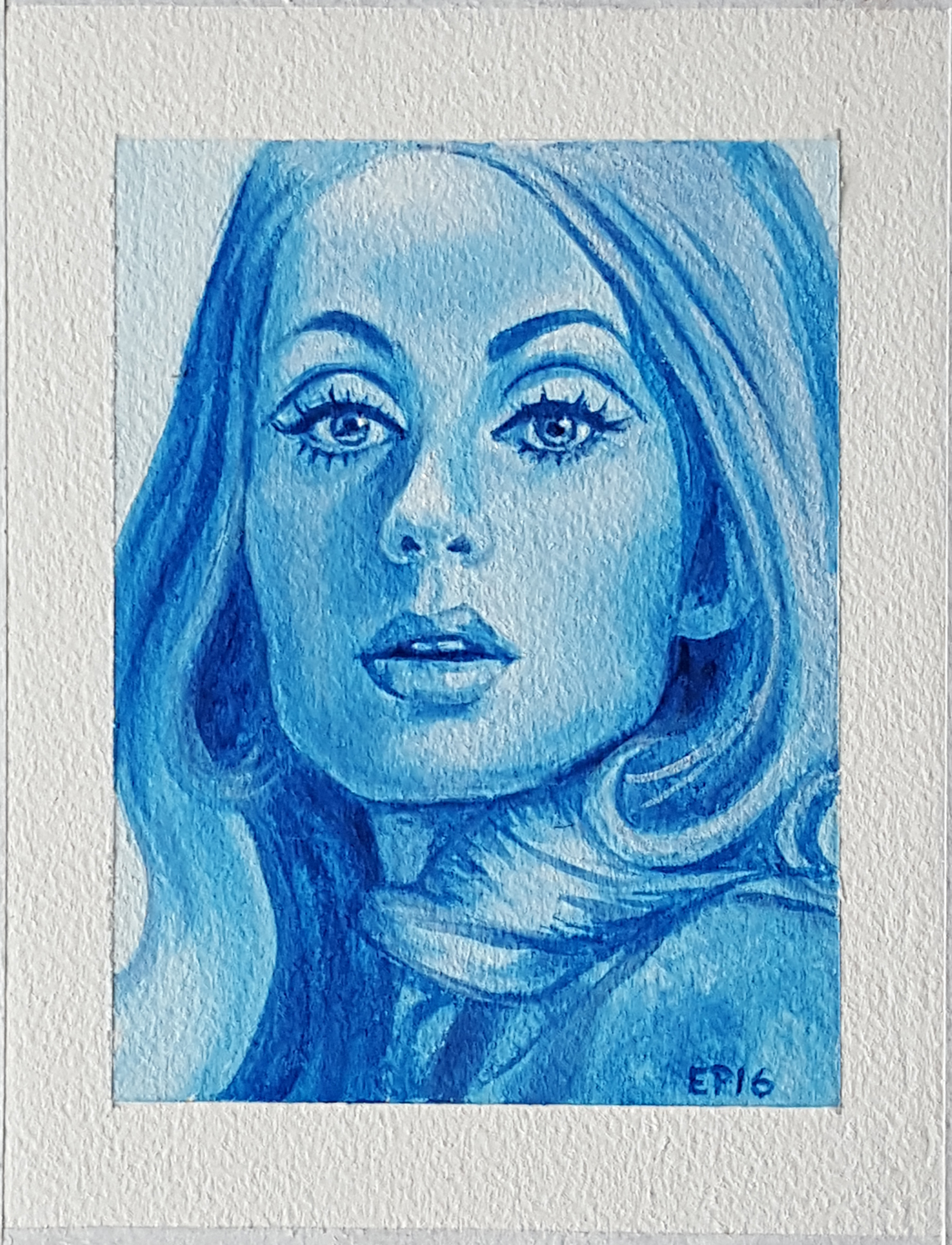
Every now and then, I like to get back to basics and do a proper study. Since most of the paintings that I have planned center on portraits of women wearing late 60’s – early 70’s clothing, an image from my copy of La Fileuse (a French knitting pattern catalog) from 1968 was a good place to start.
Being a sucker for punishment, I also decided to use only white and Phthalo Blue (“the priceless troublemaker”, as Carol Marine would say). Here’s what I learned from this particular experience:
In progress
The original image
I’m pretty happy with the results, but I have to say: Carol Marine was right about Phthalo Blue. Even the tiniest drop will have far-reaching consequences. Use with caution!
Along those lines, no amount of white on top of Phthalo Blue will be nice and bright. Best to use a light touch.
Because I wanted crisp lines along the edges of the painting, I applied a light coat of matte medium along the edge of the artists’ tape. The paint didn’t bleed, but it did form a kind of “shelf”.
Also, when you look at the painting from the side, there’s a slight difference in sheen where I applied the medium, and where I didn’t. I’m pretty sure that can be solved by applying a varnish all over, but that reminds me that…
… I forgot to varnish the painting before removing the tape. Oops.



 EMMA PITTSON